"القراءة تصنع إنساناً كاملاً، والمشورة تصنع إنساناً مستعداً، والكتابة تصنع إنساناً دقيقاً." —احصل علي عروض وخصومات خاصة عن طريق واتساب 0096550300046 -- شحن الي كافة انحاء العالم

المؤلفون

  1. الرئيسية
  2. /
  3. المؤلفون
author
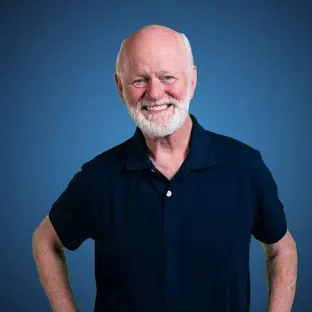
Tom Hanks

Thomas Jeffrey Hanks (born July 9, 1956) is an American actor and filmmaker. Known for both his comedic and dramatic roles, he is one of the most popular and recognizable film stars worldwide, and is regarded as an American cultural icon.[2] Hanks is ranked as the fifth-highest-grossing American film actor.[3][4] Over his career he has received numerous awards including two Academy Awards, seven Emmy Awards and four Golden Globe Awards as well as nominations for five BAFTA Awards and a Tony Award. He has been honored with the AFI Life Achievement Award in 2002, the Kennedy Center Honor in 2014, the Presidential Medal of Freedom in 2016 and the Golden Globe Cecil B. DeMille Award in 2020.[5][6][7] Hanks made his breakthrough with leading roles in a series of comedies: Splash (1984), The Money Pit (1986), Big (1988) and A League of Their Own (1992). He won two consecutive Academy Awards for Best Actor, playing a gay lawyer suffering from AIDS in Philadelphia (1993) and the title character in Forrest Gump (1994).[8] Hanks collaborated with Steven Spielberg on five films: Saving Private Ryan (1998), Catch Me If You Can (2002), The Terminal (2004), Bridge of Spies (2015) and The Post (2017), as well as the World War II miniseries Band of Brothers (2001), The Pacific (2010) and Masters of the Air (2024). He has also frequently collaborated with directors Ron Howard, Nora Ephron and Robert Zemeckis. Hanks has starred in numerous films cementing his film stardom acting in the romantic comedies Sleepless in Seattle (1993) and You've Got Mail (1998); the dramas Apollo 13 (1995), The Green Mile (1999), Cast Away (2000), Road to Perdition (2002) and Cloud Atlas (2012); and the biographical dramas Charlie Wilson's War (2007), Captain Phillips (2013), Saving Mr. Banks (2013), Sully (2016), A Beautiful Day in the Neighborhood (2019), News of the World (2020) and Elvis (2022). He appeared as the title character in the Robert Langdon series and voiced Sheriff Woody in the Toy Story films (1995–2019). Hanks directed and acted in the comedies That Thing You Do! (1996) and Larry Crowne (2011). On television, he had his acting breakthrough starring in the ABC sitcom Bosom Buddies (1980–1982). He has since has hosted Saturday Night Live a total of ten times[9] and launched his production company Playtone where he has produced various limited series and television movies, including From the Earth to the Moon (1998), Band of Brothers (2001), John Adams (2008), The Pacific (2009), Game Change (2012) and Olive Kitteridge (2015). He made his Broadway debut in Nora Ephron's Lucky Guy (2013), earning a Tony Award for Best Actor in a Play nomination.[10]

author
Nicolai J Foss-Peter G Klein

A new , important and pragmatic vision on what the job of the boss is in an age of lean/flat/agile organizations, self-organizing teams, and mass collaboration, .when bosses are expected to disappear, countering conventional wisdom of the media and management gurus. People in the business world are struggling to adapt to a rapidly changing economy. Beset by transformational forces, managers are bombarded with a bewildering array of schemes for how to be a boss and make an organization tick. t's easy to be seduced by futurist fantasies where every company has the culture of a startup, where employees in wacky, whimsical office settings champion the end of old-fashioned corporate hierarchy. Autonomous employees liberated from hierarchies and bosses that oppress people, we are told, are the foundation for breakthrough performance. Be careful what you wish for say Nicolai Foss and Peter Klein. In their important rethinking of the crucial nature of hierarchy and how to be a boss today, they provide the evidence that world-changing issues such as the proliferation of artificial intelligence, economic disruption, empowered knowledge workers, and black swan events such as the pandemic actually make hierarchy and the job of the manager more important than ever. Companies and societies, they show, need authority and hierarchy to coordinate work, including creative work. More surprisingly, Foss and Klein illustrate how the creative use of authority and hierarchy help companies be more agile and flexible. This is not command and control and bossing people around, but the clever use of hierarchy, using the authority of the boss to create highly effective organization where managers focus on creating an environment in which educated, motivated people and teams can thrive. Using entertaining examples from popular culture such as "The Social Network," "Mad Men" and "The Man in in the Grey Flannel Suit," Foss and Klein vividly illustrate that bosses really matter, not as dictators or figureheads but as designers, organizers, encouragers, and enforcers.