"القراءة تصنع إنساناً كاملاً، والمشورة تصنع إنساناً مستعداً، والكتابة تصنع إنساناً دقيقاً." —احصل علي عروض وخصومات خاصة عن طريق واتساب 0096550300046 -- شحن الي كافة انحاء العالم

المؤلفون

  1. الرئيسية
  2. /
  3. المؤلفون
author
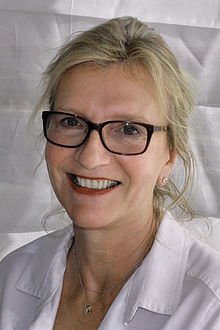
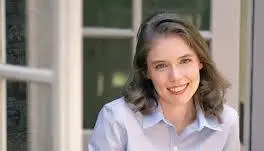
Elizabeth Strout

Elizabeth Strout (born January 6, 1956) is an American novelist and author. She is widely known for her works in literary fiction and her descriptive characterization. She was born and raised in Portland, Maine, and her experiences in her youth served as inspiration for her novels–the fictional "Shirley Falls, Maine" is the setting of four of her nine novels.[2][3] Strout's first novel, Amy and Isabelle (1998), met with widespread critical acclaim, became a national bestseller, and was adapted into a movie starring Elisabeth Shue.[4] Her second novel, Abide with Me (2006), received critical acclaim but ultimately failed to be recognized to the extent of her debut novel. Two years later, Strout wrote and published Olive Kitteridge (2008), to critical and commercial success, grossing nearly $25 million with over one million copies sold as of May 2017.[4] The novel won the 2009 Pulitzer Prize for Fiction.[5] The book was adapted into a multi Emmy Award-winning mini series and became a New York Times bestseller.[6] Five years later, she published The Burgess Boys (2013), which became a national bestseller. My Name Is Lucy Barton (2016) was met with international acclaim[7][8][9][4] and topped the New York Times bestseller list. Lucy Barton later became the main character in Strout's 2017 novel, Anything Is Possible, a collection of linked stories about the town Lucy Barton came from, although Lucy only appears briefly in the book. A sequel to Olive Kitteridge, titled Olive, Again, was published in 2019. Oh, William! a third Lucy Barton novel, was published in October of 2021. She won the Siegfried Lenz Prize in 2022. A fourth novel in the series, Lucy by the Sea, was published in 2022

author
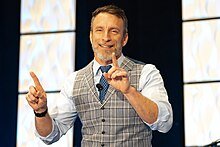
Daniel Kahneman, Olivier Sibony

Noise: A Flaw in Human Judgment is a nonfiction book by professors Daniel Kahneman, Olivier Sibony and Cass Sunstein. It was first published on May 18, 2021. The book concerns 'noise' in human judgment and decision-making. The authors define noise in human judgment as "undesirable variability in judgments of the same problem" and focus on the statistical properties and psychological perspectives of the issue.[1] Examples they give include their own finding at an insurance company that the median premiums set by underwriters independently for the same five fictive customers varied by 55%, five times as much as expected by most underwriters and their executives.[2] Another example is that two psychiatrists who independently diagnosed 426 state hospital patients agreed on which mental illness the patient suffered from only in half of the cases[3] and a finding that French court judges were more lenient if it happened to be the defendant's birthday.[4] Kahneman, Sibony and Sunstein argue that noise in human judgment is a thoroughly prevalent and insufficiently addressed problem in matters of judgment. They write that noise arises because of factors such as cognitive biases, mood, group dynamics and emotional reactions. While contrasting statistical bias to noise, they describe cognitive bias as a significant factor giving rise to both statistical bias and noise. The authors write that noise can lead to gross injustices, unacceptable health hazards, and loss of time and wealth. They argue that organizations should be more committed to reducing noise and promote noise audits and decision hygiene as strategies to detect, measure, and prevent noise. Noise: A Flaw in Human Judgment became a The New York Times Bestseller and received generally positive reviews among critics. Common critiques against efforts to reduce noise are that such efforts dehumanize those affected by the judgments and that it can lead to discrimination[citation needed]. Some commentators also questioned the authors' claims about the novelty of the noise concept.